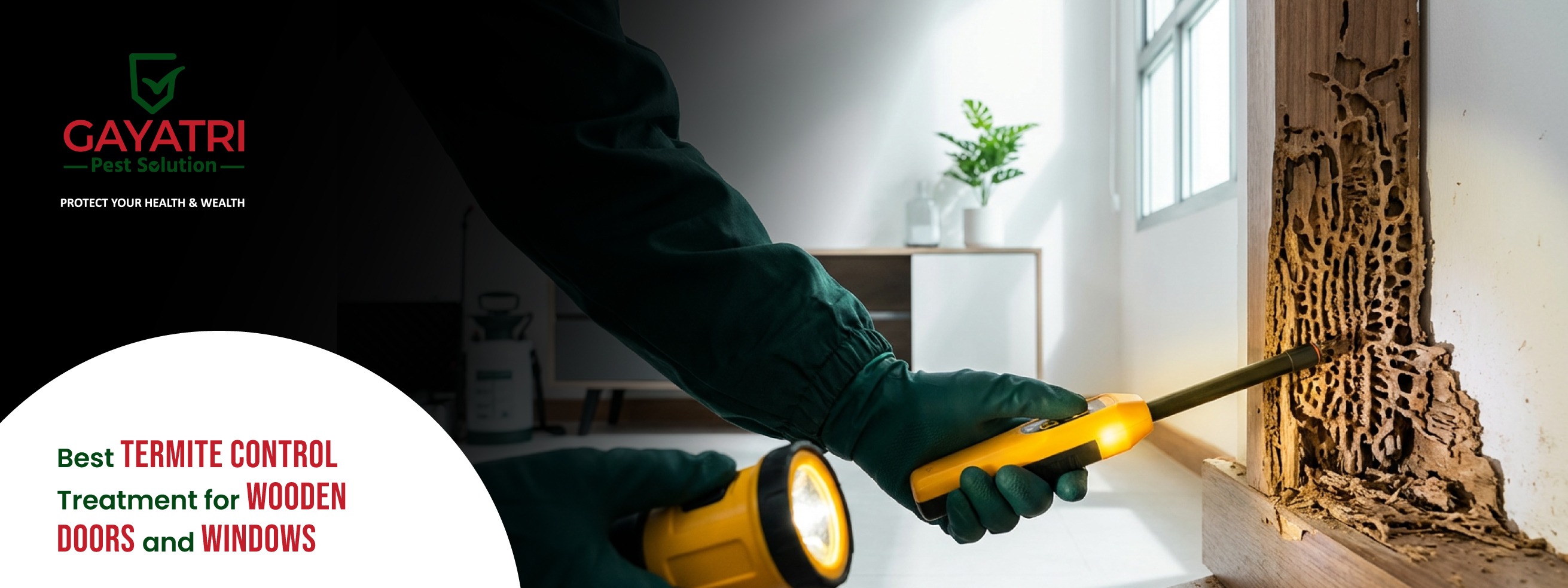
Best Termite Control Treatment for Wooden Doors and Windows
A home with beautiful wooden doors and windows looks strong. But they can also lure termites. These microscopic insects eat wood from within and gradually destroy the structure. Most people do not realize there is a problem until the wood becomes soft or begins to break. However, if you reside in a termite-prone area, then good and proper Pest Control Service in Ahmedabad can save your wooden doors and windows from serious damage.
In this blog, we will tell you why termites attack wooden structures, how to detect them early on, and finally, what treatments work best in removing them.
Reasons Why Termites Attack Wooden Doors and Windows
Termites eat cellulose, a natural ingredient of wood. Due to this, doors, windows, cupboards, and furniture made of wood easily attract them.
It is something doors and windows are often susceptible to because :
- They can come into contact with humidity.
- Tiny crevices allow termites to enter with ease.
- It provides a safe place for termites to use the wooden frames to grow their colony.
Once inside the wood, the termites do their damage slowly from within. Since the wood starts losing its strength with time, it also breaks.
Signs of Termite Damage in Wooden Doors and Windows
Being that termites often remain out of sight, it’s key to recognize the red flags. Here are some common things you need to look out for.
Hollow Sound in Wood
If you knock on your wooden door frame or window frame and it sounds hollow, this may indicate that termites have already eaten inside the wood.
Mud Lines on Walls or Frames
These enable termites to travel from the dirt into wooden areas. These lines can be found on door frames or walls.
Peeling Paint or Swollen Wood
When termites consume the wood, the paint may begin to peel or become bumpy. The wood can also sometimes look miserable.
Small Holes or Wood Dust
Small holes and powder-like dust next to wooden structures can also indicate termite presence.
If you see any of these signs, the sooner you act to fix it, the better, before damage snowballs.
Best Termite Control Treatment for Wooden Doors and Windows
Regular insect sprays will not eliminate termites. Treatment is necessary to eradicate the colony and protect the wood. Here are some effective methods.
Chemical Anti-Termite Treatment
It is one of the more common treatments. Specific substances are used on wood and the surrounding areas. These chemicals eliminate termites and also form a barrier that deters new infestations.
Usually, a professional sprays or injects the chemical into the affected areas.
Wood Injection Treatment
If termites are already eating the wood, experts drill tiny holes into the door or window frame and inject anti-termite chemicals inside.
The chemical is dispersed through the tunnels created by the termites and exterminates them within the wood.
Borate Wood Treatment
Wood structures are typically treated with borate solutions to prevent this. The solution is applied to wood, which penetrates deep and makes the wood termite-resistant.
It’s safe, durable, and often used to finish doors, windows, and furniture.
Soil Treatment
Occasionally, termites will enter from the ground beneath your house. In soil treatment, chemicals are released into the ground near the building as a barrier. It prevents the termites from coming in through the house.
As we saw, soil treatment does not stick well to the wood surface.
Why Professional Treatment Is Better
Some individuals try using home cures or store-bought sprays to get rid of termites from their houses. Termites are hard to get to since they usually dwell in wood or underground. The professional pest control specialists, like the Gayatri Pest Solution team, will inspect the area and recommend the best treatment for an infested wooden door or window.
This gives long-term prevention and elimination of termites.
Conclusion
If untreated, termite damage can be very costly, especially for timber doors and windows. You should visit Gayatri Pest Solution, because they operate silently; the problem is often not noticed until extensive wood damage has occurred.
By staying vigilant for early signs of termitic activity and using the right termite control treatment, you could save a substantial amount when replacing your timber doors and windows. Regular inspections, maintenance, and professional pest control services can keep wooden buildings safe for many decades.