Signs of Termite Infestation in Industrial Areas in Ahmedabad
Factories are designed to last, with large and heavy machinery that works nonstop. But there is one silent wrecking ball that can wreak devastation on your industrial area. Correct identification of Termite Infestation in Industrial Areas in Ahmedabad is essential to ensure structural security, safeguard against material loss and eliminate the risk of costly renovation. Industrial areas, warehouses, factories and manufacturing plants create environments that are conducive to termite nests as long as there is residual moisture, wood or minimal human interference.
Termites don't make themselves known. Instead, they toil serenely inside walls, floors, storage racks and foundations. Knowing the process of termite infestation and the early signs of its existence can assist industrial property managers in acting in time.
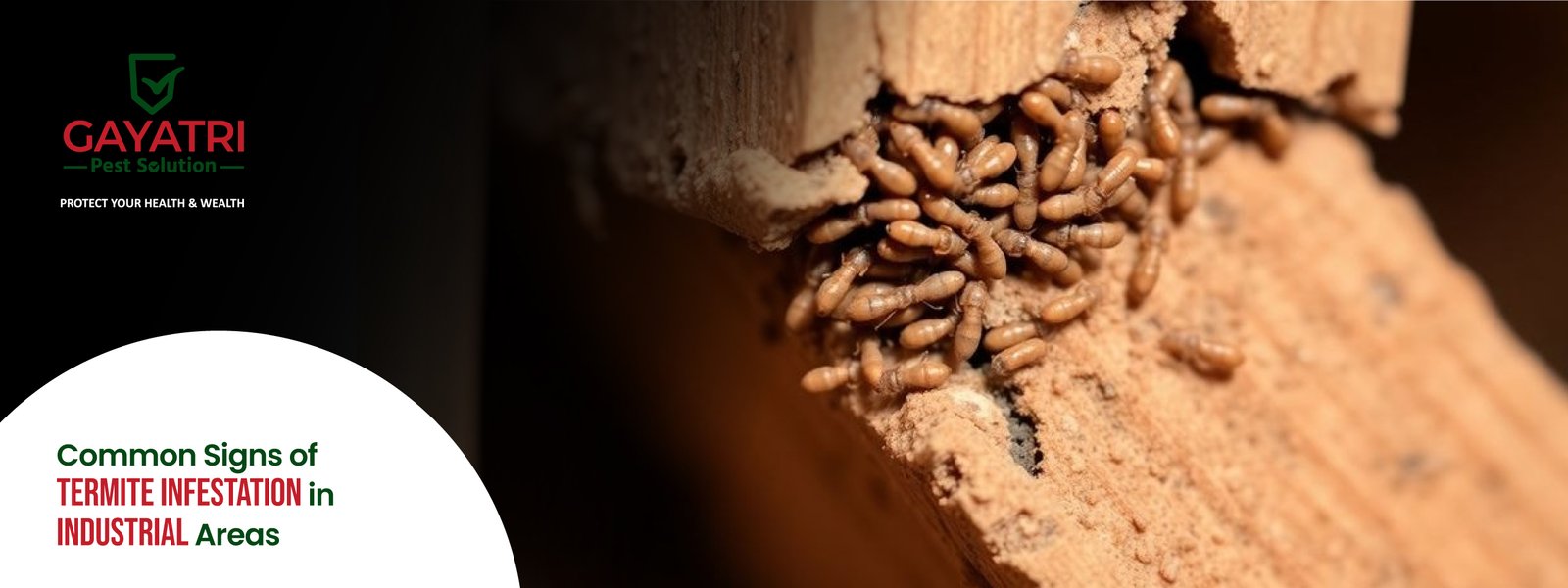
Understanding Termite Infestation in Industrial Settings
Termites are small insects with soft bodies that eat cellulose, which is available in wood, paper, cardboard and some insulation. In industrial zones, termites enter properties via wooden structures and wood goods such as packing crates and furniture.
The climate in Ahmedabad, which is warm with occasional humidity during various seasons, makes an ideal atmosphere for termite nests to flourish and grow. Such dumping sites pose the greatest threat if they are located near deposits of soil or water sources, or in poorly drained areas.
Why Industrial Areas Are More Vulnerable to Termites
Industrial properties are not the same as homes, so there can be differences that make termites more of a risk :
- Areas of the floor with limited daily inspection
- Continuous storage of wooden materials
- Excavation cables, pipeline and expansion joint underground
- Water from cooling processes, leaks or drainage
- Long periods without structural renovation
Termites start low, underground or in the walls, so those inside an industrial structure can remain invisible for months and even years.
Common Signs of Termite Infestation in Industrial Areas
1. Tubes of Mud Against Walls and Foundations
Mud tubes are one of the easiest signs to spot when it comes to termite activity. These pencil-sized tubes are constructed by subterranean termites as protection between the soil and their food source, while staying moist.
Mud tubes (in the case of industrial regions :
- Along the foundation walls
- Near expansion joints
- Around cable entry points
- Beneath loading docks
We must never disregard these tubes, as we are provided with an idea that there is some active termite colony in close range.
2. Hollow or Damaged Wooden Structures
Termites eat wood from the inside, so they leave a thin layer of wood or paint. It renders visual damage very hard to perceive.
Signs include :
- Hollow sound when you tap the timbers or pallets.
- The door, partition or frame that breaks too easily
- Weak or uneven floors
Wooden storage racks and packaging materials are especially at risk in warehouses and factories.
3. Discarded Wings Near Windows or Lights
Reproductives, also called swarmers or alates, fly and leave to establish new colonies. They lose their wings after copulation.
Piles of wings are also often found in industrial buildings :
- Near windows
- Around light fixtures
- Close to entry points
The wings usually indicate termites have already infested the building or structure (or at least a colony has).
4. Tight-Fitting Doors and Windows
Wood warping or swelling due to moisture can be caused by termite activity. It leads to difficulty opening and closing doors or windows.
It could impact industrial establishments :
- Office doors within factory premises
- Emergency exits
- Wooden window frames
These types of problems are often confused with normal wear or moisture problems.
5. Fine Wood Dust or Frass
Another type of termite, called the dry-wood termites, pushes small droppings, resembling sand, through their holes in the wood. There should be a buildup of these pellets under wood or outdoor storage.
Frass is commonly noticed in developed areas :
- Under wooden shelving
- Near packing zones
- There are dusty corners of the storerooms
Regular cleaning can postpone the finding of impaction, so regular inspection is a must.
6. Cracked or Blistered Paint Surfaces
Paint that is bubbled, blistered, or cracked with no signs of water damage could mean termites underneath. When termites bore into wood, moisture collects, and the paint layer is affected.
This sign is common on :
- Internal partition walls
- Wooden panels
- Painted support structures
7. Electrical or Structural Issues Without Clear Cause
In advanced infestations, termites can destroy insulation on wiring or undermine structural support members.
It can lead to :
- Frequent electrical faults
- Sagging floors
- Unexplained structural vibrations
These problems become very significant safety issues in industrial settings.
How Termite Infestation Develops Over Time
The termite onslaught tends to develop as follows :
- Primary Infestation - Termites gain access through soil, joints or infested items
- Colony Formation - The colony starts to build when it is around a food source
- Expansion - Tunnels in the structure and parts of the base
- Apparent Damage - Indications begin to show as more internal damage occurs
Early identification of the first and second stages is a cornerstone in turning the tide of prolonged damage.
Importance of Regular Inspection in Industrial Areas
Regular inspections are an essential aspect of termite control. Industrial facilities should periodically check :
- Foundation lines
- Storage zones
- Moisture-prone areas
- Wooden fixtures and pallets
Records of inspection support documenting changes over time and enable early intervention.
Conclusion
Termites can be a significant, yet frequently overlooked, risk to industrial facilities. This knowledge helps facility managers and business owners take action early to prevent damage caused by termites to structures and materials. Signs of Termite infestation in Industrial Areas in Ahmedabad can be controlled by seeking professional help from Gayatri Pest Solution. The most effective deterrent against termite-induced damage, in our industrial settings, is awareness, periodic monitoring and well-documented observation.