How the Anti-Termite Piping System Works Step-by-Step
Termites are the most problematic pests in many regions of India, particularly in rapidly increasing cities with ongoing development. Nowadays, both homeowners and builders have begun to install an Anti-Termite Piping System in Ahmedabad while construction is underway to reduce the likelihood of future termite infestations. This system is an intended preventative mechanism, not a remedy for damage that has already happened. If you understand how it works, you can determine if the item needs protection.
What is an Anti-Termite Piping System?
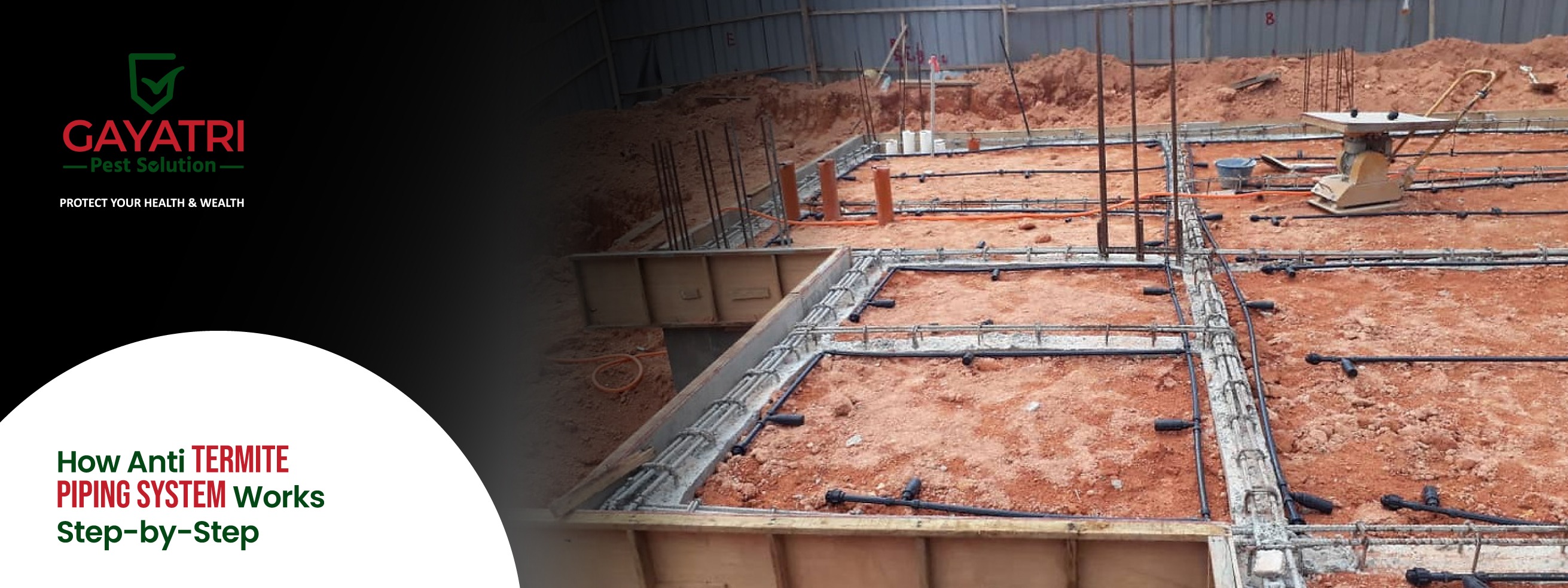
The anti-termite piping system is essentially a network of pipes that are put under and around a structure during construction. These pipes are used to distribute liquid termiticides equally across the soil. The objective is to create a chemical barrier that isolates the building from the earth, where termites generally live.
Also, it offers easy and controlled application of anti-termite solutions whenever required, instead of breaking floors or drilling. From residential buildings to commercial spaces, large-scale projects prominently utilize it.
What Is the Reason Behind It Being Installed While Construction?
In fact, termites usually come from the ground into your building. It is hard to reach the soil beneath the floors after construction. That is why this system is installed at an earlier stage.
There are a couple of benefits to installing the piping system during construction. It, as a first task, places pipes at important locations like the foundation, plinth, and external walls. Second, it prevents future damage to finished floorings or drywall.
Components of the System
A primer on the basic components involved should come first before understanding how the process takes place.
Pipes Network
These are perforated pipes that are installed in the soil. They ensure even distribution of chemicals.
Control Valves
Valves control the flow of the liquid in the pipes.
Injection Points
These are serviceable access points at which the chemical solution is sometimes poured or injected.
Connectors and Joints
They are the ones who connect the pipes and keep everything flowing.
Working of Anti-Termite Piping System Step-by-Step
Now, let us understand the process of working of the system in a simple, stepwise manner.
Step 1: Planning and Designing Layout
The process begins with planning. Pest control experts or engineers analyse the blueprint of the surrounding buildings. They then design the pipe network from the blueprint.
There are specific areas within your design that allow termites to enter more easily.
- Foundation areas
- Around columns
- Near external walls
- Entry points like plumbing lines
It will ensure that the whole structure is covered properly.
Step 2: Install Your Pipe Before Installing the Floor
After the layout is finalised, pipes are fitted before the flooring starts. They install pipes in the soil near the foundation and beneath the slab.
Tiny holes in pipes allow the liquid to come into contact with the soil around it. Once the pipes are placed, they are carefully secured so they don't shift while construction is going on. Injection points at this stage are along a well-developed network.
Step 3: Connection and Testing
All pipes are connected through joints and connectors after installation. They then test the system with either water or air pressure.
This test checks :
- Whether there are any leaks
- Whether the flow is smooth
- All sections have been attached properly or not
It is important to fix issues at this stage as access later becomes very difficult.
Step 4: Application of Termiticide
Once the structure of the building is constructed, a liquid chemical known as anti-termite penetrates the system through injection points.
Liquid travels down the pipes and seeps into the soil through small holes. The process creates a zone of treated soil.
This instructed area is a buffer. The chemical either repels termites or harms them by lowering their immune system activity.
Step 5: The Soil Flows Uniformly by
Uniform distribution is one of the major pros of this system. Unlike manual spraying, the piping system ensures that the chemical concentrates and reaches all of your target areas.
It minimises untreated spots that let termites through quickly.
Step 6: Regular Refilling and Maintenance
The chemical's effect lasts for a shorter time since soil conditions and environmental elements interact throughout this time. The system may be quickly replenished without breaking any floors.
Experts can re-inject the medication using comparable injection variables. It helps to provide long-term protection.
You should also do frequent inspections to ensure that the system is functioning properly.
How It Prevents Termite Entry
These termites live underground and navigate between young plants through mud tunnels. The movement of these organisms is influenced by a chemical barrier.
It does not directly kill termites but mainly prevents them from getting on their way. The fact that the barrier is built around the perimeter of the building makes it impossible for termites to access the woodwork.
Thus, this is what makes early installation renowned in the management of termites.
Where Is It Commonly Used?
The anti-termite piping system is often employed in
- Independent houses
- Apartment buildings
- Commercial complexes
- Warehouses
- Offices
It is especially helpful in termite-prone regions.
Limitations to Understand
The system can be useful, but it is important to know its limits :
- It needs to be properly set during the construction
- It needs periodic chemical refilling
- It does not replace termite-damaged parts
- Soil type and care affect effectiveness
Setting reasonable expectations makes for better planning.
Final Thoughts
An anti-termite piping system is a preventive method that helps you protect buildings and structures from the entry of termites through soil. It establishes a controlled chemical barrier, which reduces the risk of infestation.
Being aware of each step, such as planning, installing, and maintenance, will help make the system work much more effectively. As awareness about the safety of structures in the long run increases, modern construction is slowly moving to an anti-termite piping system. If you are also one of those who is looking for an anti-termite piping system, you can visit Gayatri Pest Solution.